

School Uniform Policy
Information has been taken from our Uniform Policy (link found on our policies page) which is reviewed annually by the Governing Body.
Contents
- Aims
- Our school’s legal duties under the Equality Act 2010
- Limiting the cost of school uniform
- Expectations for school uniform
- Expectations for our school community
- Monitoring arrangements
- Links to other policies
1. Aims
- Set out our approach to requiring a uniform that is of reasonable cost and offers the best value for money for parents and carers
- Explain how we will avoid discrimination in line with our legal duties under the Equality Act 2010
- Clarify our expectations for school uniform
2. Our school’s legal duties under the Equality Act 2010
- The Equality Act 2010 prohibits discrimination against an individual based on the protected characteristics, which include sex, race, religion or belief, and gender reassignment.
- To avoid discrimination, our school will:
- Avoid listing uniform items based on sex, to give all pupils the opportunity to wear the uniform they feel most comfortable in or that most reflects their self-identified gender
- Make sure that our uniform costs the same for all pupils
- Allow all pupils to style their hair in the way that is an appropriate style and colour for school yet makes them feel most comfortable
- Allow pupils to request changes to swimwear for religious reasons
- Allow pupils to wear headscarves and other religious or cultural symbols
- Allow for adaptations to our policy on the grounds of equality by asking pupils or their parents to get in touch with their child’s class teacher, who can answer questions about the policy and respond to any requests
3. Limiting the cost of school uniform
Our school has a duty to make sure that the uniform we require is affordable, in line with statutory guidance from the Department for Education on the cost of school uniform.
We understand that items with distinctive characteristics (such as branded items, or items that have to have a school logo or a unique fabric/colour/design) cannot be purchased from a wide range of retailers and that requiring many such items limits parents’ ability to ‘shop around’ for a low price.
We will make sure our uniform is available at a reasonable cost and provides the best value for money for our parents and carer. We will do this by:
- Carefully considering whether any items with distinctive characteristics are
- Avoiding specific requirements for items pupils could wear on non-school days, such as coats, bags and shoes
- Keeping the number of optional branded items to a minimum, so that the school’s uniform can act as a social leveller.
- Avoiding different uniform requirements for extra-curricular activities
- Making sure that arrangements are in place for parents to acquire second-hand uniform items
- Avoiding frequent changes to uniform specifications and minimising the financial impact on parents of any changes
- Consulting with parents and pupils on any proposed significant changes to the uniform policy and carefully considering any complaints about the policy
- Providing pre-loved uniform for sale within the school
4. Expectations for school uniform
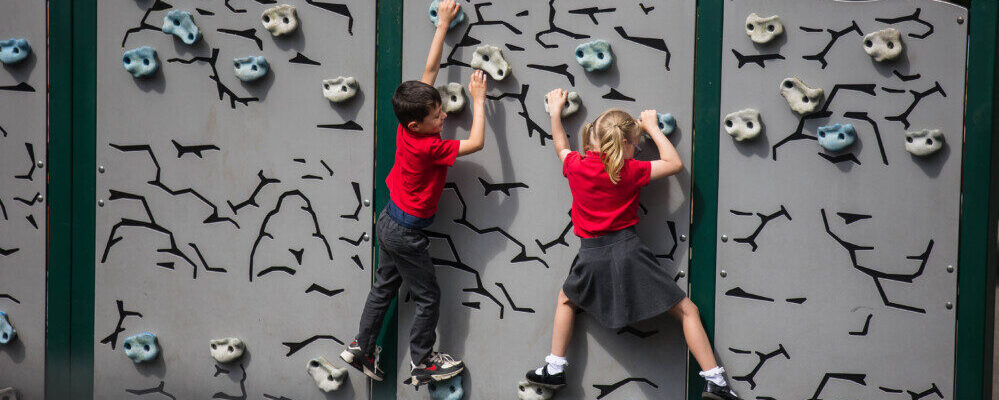
- Red sweatshirt or red cardigan with or without school logo.
- Red polo shirt with or without the school logo.
- Dark Grey trousers / shorts
- Dark Grey skirts or pinafore dresses (should be of an appropriate length that allows pupils to move safely and comfortably during school activities)
- Red checked summer dresses (should be of an appropriate length that allows pupils to move safely and comfortably during school activities)
- Black shoes or closed toed black sandals in the summer
PE Kit
- Red T-shirt with or without logo
- Black PE shorts – (should be of an appropriate length that allows pupils to move safely and comfortably during school activities. A helpful guide; standing with hands by your side – shorts should be approximately in line with fingertips)
- Trainers
- Black jogging/track suit bottoms during colder weather
- School jumper to be worn with PE Kit
- Red/Black sports socks
Swimming Kit
- Pupils may wear swimwear that is safe, practical and appropriate for swimming lessons, including modesty swimwear for religious or cultural reasons.
- Goggles
- Towel
Jewellery
The only permitted jewellery that may be worn is:
- One pair of stud earrings (no other piercings are permitted)
- A sensible wristwatch (not a smartwatch)
- Pupils may wear jewellery required for religious or cultural reasons, subject to risk assessment for safety.
Jewellery is the responsibility of the pupil and not the school. Lost or damaged items will not be refunded. All jewellery must be removed during practical lessons, for example, PE lessons or swimming lessons. If children cannot remove their own earrings, then this should be done at home on the day of PE.
School Bag Guidance
Key Stage One – Key Stage One children are provided with a Book Bag. These are provided by the PTSA. Teachers are able to effectively store these in classrooms and are able to support the children to increase their independence with organising their home / school equipment.
Key Stage Two – The children may bring their belongings in their own backpack but this should be clearly named. The bag should be appropriately sized to carry books. Children do not need to bring their own stationary or pencil cases as all equipment is provided by the school. The school encourages pupils to bring non-valuable bags to school. The school will not be liable for lost or damaged school bags.
Hair Styles
Hairstyles should be safe and suitable for school activities. The school recognises and respects all hair types and cultural styles, including braids, locs, twists and afros.
Restrictions will only apply where there is a clear health, safety, or safeguarding reason.
Make-Up
Make-up should not be worn unless for specific approved reasons (e.g. cultural, medical).
Nail varnish should be clear or neutral unless otherwise agreed.
Labelling
School staff encourage good organisation of clothing and footwear, for example, designated spaces for children to keep belongings in and checking of labels. Pupils’ clothing and footwear should be clearly labelled with pupil name – this will enable the effective return of lost items.
Clothing and footwear are the responsibility of the pupil and not the school.
If a child goes home in another child’s clothing by accident, for example, their jumper, parents/carers should send the clothing not belonging to them back into school to their child’s class teacher.
Any lost clothing is to be taken to the lost property box. The lost property is sorted weekly and named items will be returned to the child. Unnamed lost property is retained for a half term.
5. Purchasing Options
- Branded items of school uniform are supplied by myclothing. These may be purchased online at myclothing.com . All other items of generic school uniform may be purchased from any supermarket or high street retailer.
- The school is proud of the ‘pre-loved’ initiative started by the School Council. We hold a limited amount of second-hand uniform, which is available for parents to purchase. This is displayed at the entrance to the school. Donations of good quality second-hand uniform are welcomed and the School Council run an annual end of year non school uniform day event to encourage these donations.
- Expectations for our School Community
Pupils are expected to wear the correct uniform at all times (other than specified non-school uniform days) while on the school premises, or attending out-of-school events or on trips that are organised by the school, or where they are representing the school (if required). Parents and carers are expected to support the school and ensure their child has the correct uniform and PE kit.
Parents are expected to lodge any complaints, objections or concerns relating to the school uniform in a timely and reasonable manner. Requests for adaptations will be handled sensitively and confidentially. Families may speak to the class teacher, SENDCo or a member of the leadership team. The school will work with families to resolve uniform concerns in a supportive and non-punitive way.
- Staff
Staff will work closely with pupils and their families to support them in meeting our school uniform expectations. If a child is not wearing the correct uniform, teachers will speak with parents or carers in a friendly and respectful way to understand the situation and offer support where needed.
We recognise that there can be a range of reasons why a child may not be in full uniform, and we are committed to working in partnership with families to find practical, supportive solutions. Wherever possible, we will allow time for any difficulties to be resolved and will signpost or provide support if needed.
If concerns continue over time, the headteacher may become involved to ensure we are offering the right support and maintaining a consistent approach for all pupils.
Any ongoing issues will be managed in line with the Behaviour and Relationships Policy, always with a focus on understanding, inclusion and positive relationships.
Where financial pressures or other individual circumstances may be affecting a family’s ability to meet the uniform expectations, staff will respond with sensitivity, discretion, and a non-judgemental approach, and will work with families to ensure appropriate support is in place.
8. Governors
The governing board will review this policy and make sure that it:
- Is appropriate for our school’s context
- Is implemented fairly across the school
- Takes into account the views of parents and pupils
- Offers a uniform that is appropriate, practical and safe for all pupils
The board will also make sure that the school’s uniform supplier arrangements give the highest priority to cost and value for money, for example by avoiding single supplier contracts and by re-tendering contracts at least every 5 years.
9. Monitoring arrangements
This policy will be reviewed annually. At every review, it will be approved by the Local Governing Committee.